Concrete patio construction in Arlington WA - a slab that sheds rain away from the house
Mud by the back door, or an old slab cracking and sinking? We pour a patio on solid ground, sloped away from the house.
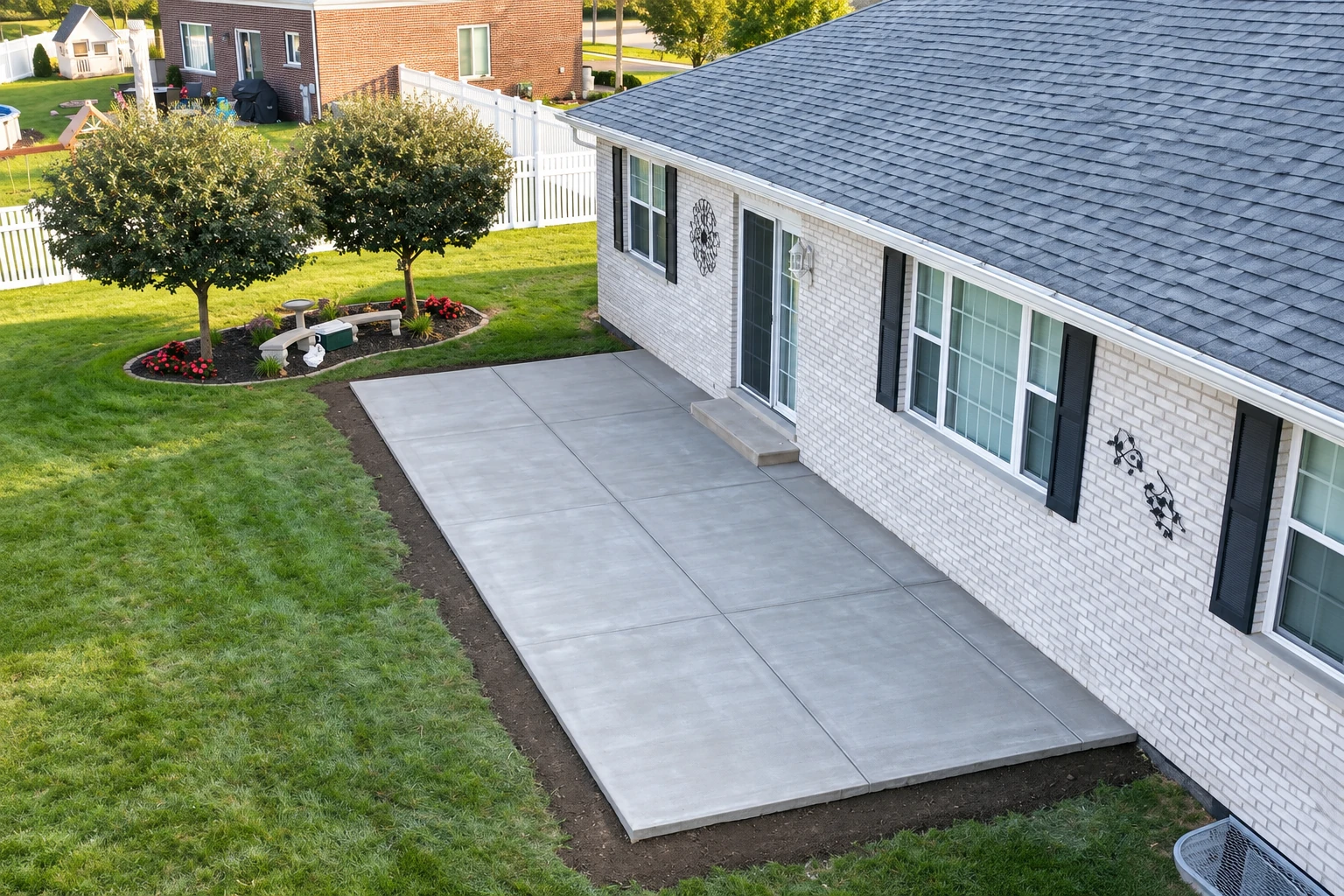
Most calls for concrete patio construction in Arlington start with a spot out the back door that turns to mud every winter, or an old slab that has cracked, sunk or tipped so rain runs toward the house. We build the patio as a solid slab shaped to shed water away from your walls, and I start with the ground under it, because that decides how long it stays flat.
The price moves with the size, how much digging and base work the ground needs, the finish and how close a truck can get. The schedule mostly turns on the weather and the season. Your own number comes from the written estimate after I've measured. If you want a path out to the patio, we also build concrete sidewalks.
What our concrete patio work covers
- I come out myself. I started Arlington Concrete in 2023 after years with a big commercial outfit. I'm the one who comes out to look at your yard, and our crew and I do the work.
- A dug-out, packed base. We dig out the soft soil and pack the subgrade, the ground the slab sits on, instead of raking it level, because loose dirt settles and takes the slab with it.
- Sloped away from the house. National guidance says slabs within 10 feet of the house should slope away from it, so we shape the patio to drop toward the yard, not your siding.
- Drainage planned before pouring. Here in the Northwest, a base that stays wet grows moss and heaves far sooner than in drier climates, so we work out where water goes under and around the slab first.
- Joints cut on time. Control joints are shallow cuts that give the slab a straight line to crack along, and we cut them on time, because late or skipped joints leave cracks wherever they please.
- Licensed and insured in Washington. Washington requires construction contractors to register with the state Department of Labor & Industries, and we're fully licensed and insured. You can check a contractor's registration before you sign.
What goes wrong with patio slabs
| Problem | What it looks like | Usual fix |
|---|---|---|
| Sinking or settled slab | What it looks like: A corner dropping, a lip at the door, cracks across the middle | Usual fix: Break it out, dig and pack the base, repour |
| Water running toward the house | What it looks like: Puddles against the siding or a damp crawlspace after a rain | Usual fix: Rebuild the slab to fall away from the house |
| Cracks in random places | What it looks like: Cracks wandering across the slab instead of following the cut lines | Usual fix: Replace with control joints cut on time |
| Dusty, chipping surface | What it looks like: A powdery top that chips, flakes or wears through in patches | Usual fix: Resurface if it's minor, or repour away from midday heat |
Fix it, replace it or build new
- Fix what's there. If the old slab is flat and still drains away from the house, patching or sealing a few cracks may do, and I'll tell you so before selling you a new one.
- Tear out and repour. When it has sunk, tipped toward the house or cracked all over, the base is the problem, so we break it out, rebuild the base and pour fresh.
- Build new. On bare ground we pour new with a broom finish, fine ridges for grip, or stamped concrete. For wet days, I'll show you exposed aggregate, a pebble top that grips well.
How a patio job runs
- Call or message. Call (360) 474-2804 or send the form, and we'll get back to you to set a time for me to come out.
- I look at the yard. I come out, measure, look at the ground and slope, ask how you'll use the patio and send a written estimate showing what's in it and what isn't.
- Permits and layout. We check what the city or county wants before scheduling, tell you what we'll file and what falls to you, then settle layout, prep and drainage.
- Prep, pour and cure. Our crew digs out, packs the base and pours, covering it if rain's coming. Curing, the wait while it gains strength, runs longer in cool, wet weather.
- Walk-through and clean-up. We walk the finished patio with you, check the fall and the joints together, and leave the yard cleaned up.
What keeps a patio sound for years
What holds a patio up for the long run is the part you can't see on day one, the base and the drainage under it. If the budget gets tight, I'd rather you pick a plain broom finish than skimp on the base, because a fancy top on settling dirt cracks just the same.
We're based in Arlington and build patios for homeowners here and in the cities around it, from Everett up into the Skagit Valley and out to Camano. Small business owners call us for pads too. Call or send the form for a free estimate.
Tell us about your patio
Send the patio's rough size, its distance from the house and whether the lot's in a flood hazard zone, and we'll reply within one business day.
(360) 474-2804- Free estimate on site
- No pressure to book
- What's included, in writing
Patio questions we get
How much does a concrete patio cost in the Seattle area?
A standard concrete patio in Seattle usually costs about $4,300 to $5,400 per job. That's a market figure, not our price, and size, base work and finish push it up or down, which is why I measure before I quote.
How long does a concrete patio last compared to pavers?
Concrete patios last about 30 to 50 years on average, against 25 to 35 years for brick pavers, going by Seattle-area cost research. That makes concrete the steadier long-term pick of the two, and how many of those years yours gets comes down to the base and drainage described above.
Do I need a permit for a concrete patio in Arlington WA?
Check with the city first, because Arlington's Building Services Division issues its permits and its exemption list names small freestanding patio covers, not concrete patios. If your lot's in a flood hazard zone, you'll need a flood hazard permit regardless, and exempt work still has to meet setbacks from property lines and buffers to steep slopes, streams and wetlands.
When is the best time to pour a concrete patio in Washington?
Late spring, April to May, and fall, September to October, are the easiest times, with good weather in spring and less demand in fall, according to a Washington contractor directory. Summer is busiest with the longest waits, and a pour from November to March can be done but adds cost in the cold.
Will a new concrete patio crack like my old one?
It can still crack, but on a packed base with joints cut on time, the cracks usually land in the joints instead of across the middle. Old patios that cracked everywhere usually sat on raked dirt or had their joints cut late.