Decorative concrete in Arlington WA - a finish that fits how you use the space
A plain gray patio or walk that looks tired? We add color and pattern on a solid base, in the spots where they make sense.
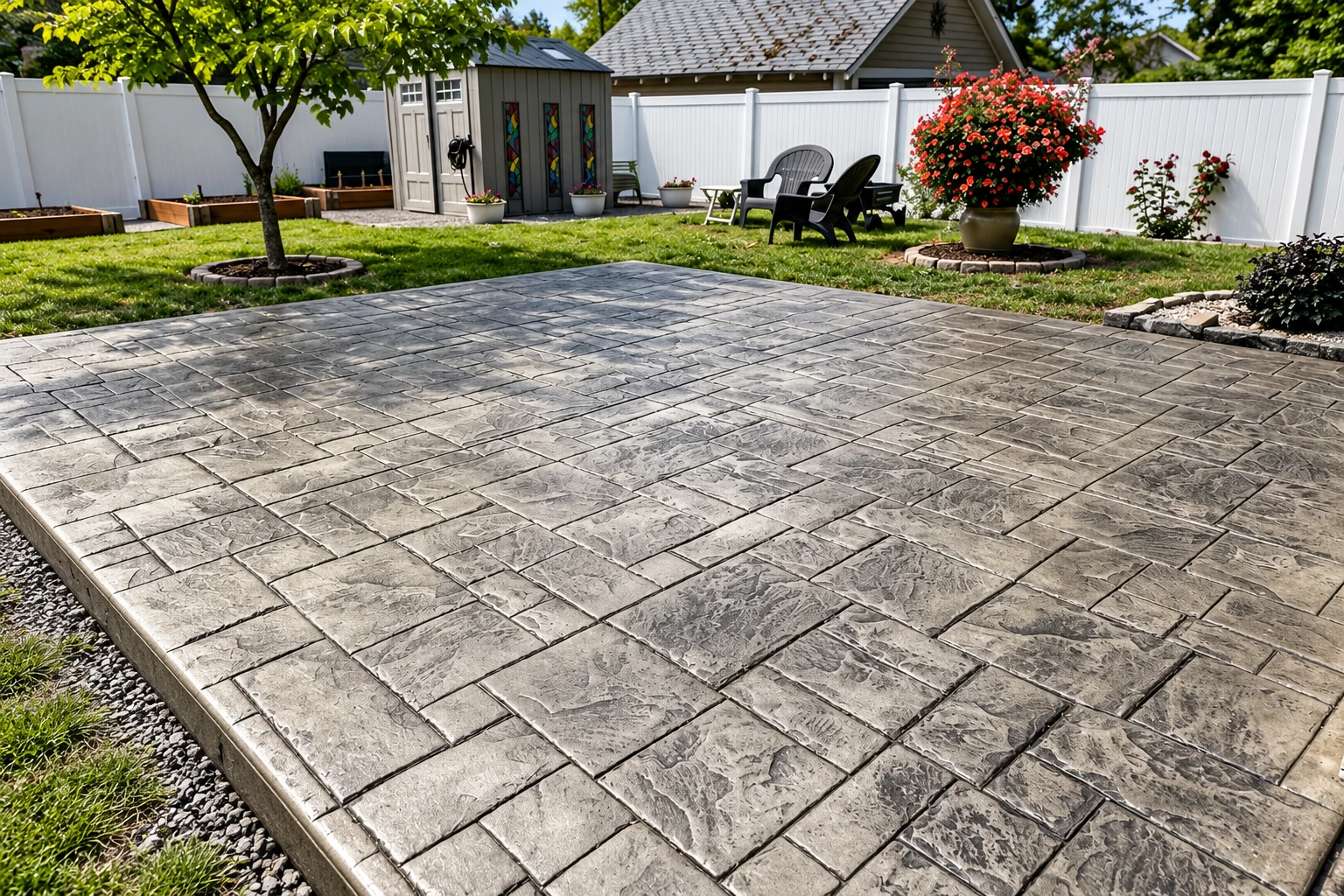
Decorative concrete is concrete with color, texture or a pattern pressed in, like stamped concrete that passes for stone, finished with a sealer that needs care over the years. People in Arlington usually call us when a plain slab looks tired or an old decorative patio is flaking and faded. Before you pick a sealed finish, I'll tell you plainly what upkeep it brings.
The price comes down mostly to the size of the area, how detailed the design is and local labor rates, since a pattern in several colors takes more hands than a single texture. The schedule turns on settling the design and anything the city needs before we book the crew. The estimate gets you the number for your own job.
What our decorative concrete work includes
- I plan it on site. I spent years planning commercial slabs and lots before starting here in 2023, and I'm the one who comes out, asks how you'll use the space and lays out the design.
- Base dug out and packed. We dig out and pack the subgrade, the ground the slab sits on, because no pattern can hide a slab that settles with the dirt under it.
- Drainage settled first. We look at where water runs before the pour so the surface falls away from your house, and on a slope a concrete retaining wall may need to come first.
- Joints worked into the pattern. We cut control joints, grooves that give the slab a chosen place to crack, on time and lined up with the pattern so they read as part of the design.
- Sealed finish where it fits. Sealed surfaces can turn slippery when wet, so we put the decorative work where you'll enjoy it and keep plainer textured concrete where people walk in with wet shoes.
- Licensed and insured. We're fully licensed and insured, and our crew and I do the work ourselves, bringing in an engineer or another trade only when a job needs one.
What goes wrong with decorative slabs
| Problem | What it looks like | Usual fix |
|---|---|---|
| Flaking top layer | What it looks like: Thin layers peeling off the surface, usually worst after winter | Usual fix: Remove the loose surface and reseal |
| Worn-out sealer | What it looks like: Color fading and patchy, water soaking in instead of beading up | Usual fix: Clean and reseal the whole surface |
| Settled or cracked sections | What it looks like: Cracks running through the pattern, one side sitting lower than the rest | Usual fix: Replace the section over a dug-out, packed base |
| Water pooling or running back | What it looks like: Puddles that sit after rain, or runoff heading toward the house | Usual fix: Regrade and repour with a fall away from the house |
Reseal, repair a section or pour new
- Clean and reseal. If the slab is sound and the pattern intact but the color looks dull and water soaks in, a cleaning and fresh sealer is usually all it needs.
- Replace one section. When one area has settled or cracked and the rest holds, we cut that part out, fix the base under it and pour new, though fresh color rarely matches weathered color exactly.
- Pour new. When the old slab is failing or you're starting from dirt or gravel, we pour new, and if the budget's tight I'd simplify the pattern before I'd skimp on the base.
How we plan and run the job
- You call, I come out. Call or send the form, then I come out to look over the ground, see how water runs and ask how you'll use the space.
- Written estimate. I measure and send a written estimate that says plainly what's in it and what isn't, so you can compare it fairly.
- Plan and permits. Before we schedule, we check what the city or county office wants, tell you what we'll file and what falls to you, and settle layout, pattern and drainage.
- Pour and walk-through. Our crew preps the base, pours, stamps and seals, then cleans up, and we walk the finished job with you.
Keeping a decorative surface in good shape
Most of what keeps decorative concrete looking right happens after we leave. Keep the sealer fresh, sweep off grit, and skip deicers in winter, because they soak in and make the flaking from freezing and thawing worse. I'll point out what to watch for when we walk the finished job.
We're based in Arlington and work in the cities around it, from Everett up into the Skagit Valley and out to Camano, for homeowners dressing up a patio or entry and small business owners who want a finished new concrete floor. If your city isn't listed, call and ask. Either way, tell us about the space and ask for an estimate.
Tell us about your project
Send the rough size, the look you want and whether you're in a flood hazard zone. We reply within one business day to set up a visit.
(360) 474-2804- Free on-site estimate
- Written, says what's included
- No pressure to book
Questions about decorative concrete
What does a stamped concrete project cost near Arlington?
The nearest published figure is for Seattle, where a stamped concrete project usually runs about $4,000 to $9,500 per job. Where yours lands depends on the size of the area, how detailed the design is and local labor rates. I'll measure on site and give you a written number for your project.
How often does stamped concrete need to be resealed?
Stamped concrete should be resealed every two to three years, so plan for it as part of what the surface costs to own. The sealer is what keeps water and grime out of the color, and it wears down with weather and foot traffic.
Who issues building permits in Arlington, WA?
Arlington's Building Services Division issues the permits state and local codes require, and a lot in a flood hazard zone also needs a flood hazard permit. You can ask the city's Community & Economic Development team about your project at ced@arlingtonwa.gov or 360-403-3551. Mention it if the patio goes over dirt or gravel, since the state counts that as new hard surface.
How do I check a contractor's license in Washington State?
Use the Department of Labor & Industries' Verify tool, which shows whether a business has an active contractor registration and a paid-up workers' comp account for its employees. Washington requires every construction contractor to register and to be bonded and insured, and the tool also lists safety violations and lawsuits against a contractor's bond.