Concrete retaining walls in Arlington WA - a wall that drains and stays put
Slope slumping or an old wall leaning out? We build concrete walls that hold the ground and give the water a way out.
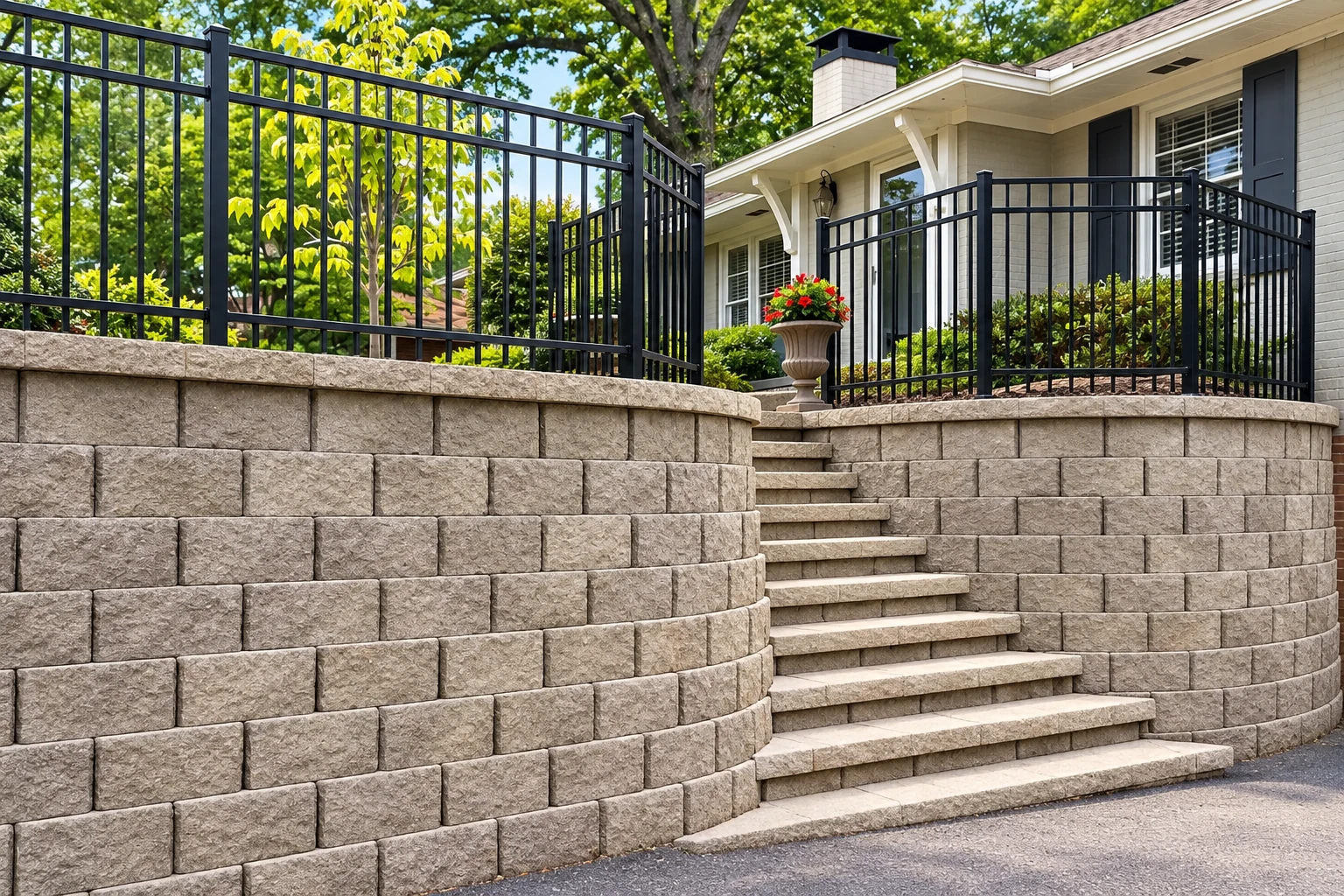
Most calls we get about concrete retaining walls in Arlington, WA start with an old wall leaning out, cracking or weeping mud at the bottom, and water trapped behind it is usually the cause. The wall we build is poured in place on a packed base with drainage behind it, and it holds back a slope so you get level ground for a yard, a driveway or a concrete pool deck.
Price moves with the wall's height and length, the digging and base it takes, the drainage, and any permit or engineered plans. The schedule turns mostly on that permit work and the weather. If a stacked wall will do, I'll tell you, and your written estimate spells out what your wall includes and what it doesn't.
How we build a concrete retaining wall
- I come out and look. I'm the one who comes out to see the height, what sits above the wall and where the water runs, and we bring in an engineer when a wall calls for one.
- Planned before the truck comes. I spent years pouring slabs, footings and lots for a big commercial outfit before starting here in 2023, and that's where I learned to plan the base and drainage first.
- A base dug wide and packed. A wall is only as good as what it stands on, so we dig wider than the wall itself and pack the base out past its front and back.
- Drainage built in from the start. Gravel backfill and drain pipe carry the water behind the wall down and away, and we lean toward drains that can be cleaned out later.
- Licensed and insured before we dig. We're fully licensed and insured, and our own crew does the digging, forming and pouring on your wall.
What goes wrong with retaining walls
| Problem | What it looks like | Usual fix |
|---|---|---|
| Water trapped behind | What it looks like: Damp face, mud seeping at the base, wall pushing outward | Usual fix: New gravel backfill and drain pipe, or a rebuild |
| Leaning wall | What it looks like: Top tipping forward, a gap opening along the ground behind it | Usual fix: Rebuild on a wide, packed base with drainage |
| Clogged weep holes | What it looks like: Holes stay dry while the ground behind stays soggy after rain | Usual fix: Clear them, or add a drain you can clean |
| Sinking base | What it looks like: One end dropping, cracks running down from the top | Usual fix: Dig out, pack a new base and pour again |
Fix it, stack it or pour it
- Fix the drainage. If the old wall is still straight and solid but stays wet behind, new gravel and drain pipe may be all it needs, and I'll say so.
- Stacked wall. For a low wall holding a garden bed or a gentle grade, a dry-laid wall of stacked, open-joint block or stone costs much less and often does the job.
- Poured concrete wall. When a wall holds a driveway, added fill or a hillside cut for a garage and its concrete floor installation, poured concrete with rebar, the steel that holds it together, is worth paying for.
How a wall job runs
- Call or send the form. Call (360) 474-2804 or send the form with a few lines about the slope and what you want the wall to do.
- I measure and write it up. I walk the site, ask how you'll use the ground, and send a written estimate that says plainly what's in it and what isn't.
- Permits sorted first. Before we schedule anything, we check what the city or county office wants and tell you what we'll file and what, if anything, falls to you.
- Layout and water settled. Before the pour we agree on where the wall runs, how the base gets dug and packed, and exactly where the water behind it will leave.
- Build, cure and walk it. Our crew digs, packs, sets the drains and pours, lets the concrete cure and harden before backfilling, then we clean up and walk the wall with you.
Keeping a retaining wall draining for years
A wall stays sound while the water behind it has somewhere to go. Keep the drain outlets clear of mulch and leaves, point downspouts away from the top, and call before you add fill, a shed or parking above it, since that's weight the wall may not have been built for.
We build walls for homeowners and small business owners in Arlington and the cities around it, from Marysville and Everett up into the Skagit Valley and out to Stanwood and Camano. Call and ask for an estimate.
Tell us about your wall
Send the wall's height, what it holds up and any nearby slope, stream or flood zone. We reply within one business day to set a visit.
(360) 474-2804- Free estimate on site
- Written, with what's included
- No pressure to book
Questions about retaining walls
How much does a concrete retaining wall cost in Washington?
Retaining walls in Washington usually cost about $35 to $45 per square foot, going by statewide pricing. Height, how much digging and base the site needs, the drainage, and any permit or engineered plans all move where yours lands.
Does a retaining wall in Arlington need a permit?
The city requires a building permit for a retaining wall over 4 feet tall, measured from the bottom of the footing, the concrete foot it stands on, and for shorter walls holding extra load like fill. Those walls also need engineered plans, so an engineer's design comes first and adds to the project. Applications go in online.
What if my Arlington lot is steep or close to a stream?
Expect a few extra checks, because they decide where the wall can sit. Arlington's setbacks from property lines and buffers from slopes, streams, lakes and wetlands apply even to permit-exempt work, and a flood hazard zone needs a flood hazard permit. Snohomish County rules have a geotechnical engineer check slopes of 33% or more on your parcel or within 200 feet of the work for landslide hazard.
Why do concrete retaining walls usually fail?
Most fail because water builds up behind them and pushes the wall out. Gravel backfill, or drainage blankets and drain pipe, carry that water down and away, so ask any bidder exactly how their wall will drain.
Do weep holes in a retaining wall need upkeep?
Yes, weep holes, the small openings that let water out, are likely to clog over a wall's life. Research on wall drains found drains built to be maintained more reliable, so it pays to have one that can be cleaned and to check the outlets after a heavy rain.