Concrete sidewalk building in Arlington WA - a level walk built on packed ground
Cracked, heaved or sunken walk tripping people up? We dig out, pack the base and pour a new sidewalk that drains away from your house.
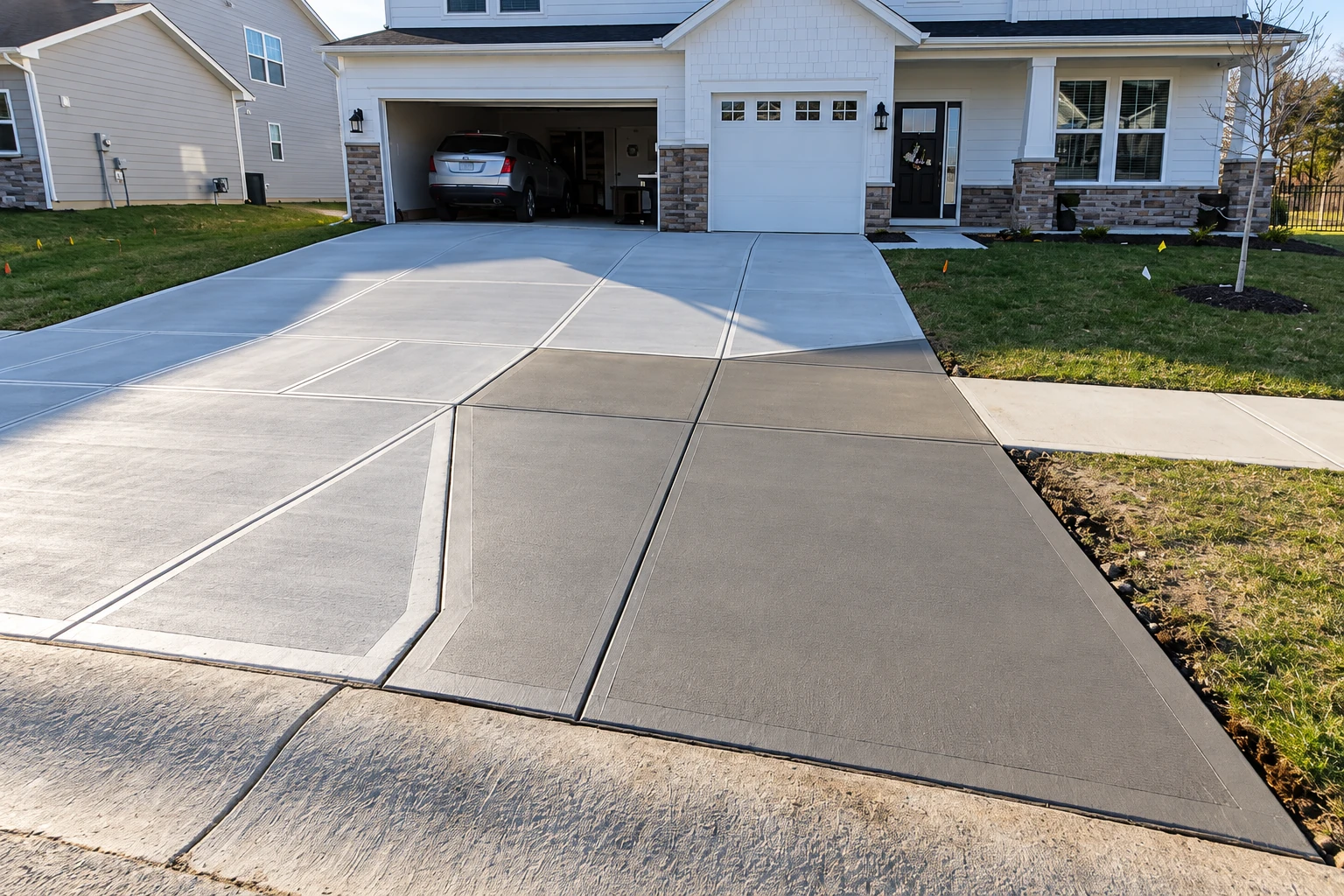
Concrete sidewalk building in Arlington, WA usually starts with an old walk that's cracked, sunk or pushed up into a lip that catches toes. Most walks are about four inches thick, and when one fails, the cause is usually underneath, in dirt that was raked flat instead of dug out and packed. That's where we start, and we often tie the walk into other slabs, like a new garage floor.
The price comes down to the length and width, whether the old walk has to come out, and whether a car will ever cross it, since a walk that carries a car may need a thicker, costlier pour. The schedule turns on the weather and the curing time, the wait while fresh concrete hardens enough to use. My written estimate puts your own figure on it.
What goes into a concrete sidewalk we build
- The owner on your site. I'm the one who comes out to look at your walk. I spent years pouring slabs for a big commercial outfit before starting this business in Arlington in 2023.
- Built for cars or just feet. We ask early whether a car will ever cross the walk and look at nearby trees whose roots could lift it, because both change how we build it.
- Ground dug out and packed. We dig out soft dirt and pack the subgrade, the ground the slab sits on, then slope the walk so rain runs off it and away from your house.
- Joints cut on time. We cut control joints, shallow grooves that tell the slab where to crack, while the concrete is still young, so a crack usually follows our groove, not a random line.
- Licensed and insured in Washington. We're fully licensed and insured, so you aren't carrying the risk if someone gets hurt or something gets damaged while our crew is on your property.
What goes wrong with old sidewalks
| Problem | What it looks like | Usual fix |
|---|---|---|
| Sunken sections | What it looks like: One panel sits lower than the next, with puddles after rain | Usual fix: Dig out, pack the base and repour |
| Heaved by tree roots | What it looks like: An edge lifted near a tree, leaving a lip that trips people | Usual fix: Cut out the panel, work around roots, repour |
| Cracks in random places | What it looks like: Cracks wandering across panels instead of following the grooves | Usual fix: Repour with control joints cut on time |
| Water running toward the house | What it looks like: The walk tips toward your foundation and water sits against the siding | Usual fix: Regrade and repour so the walk sheds water away |
Patch it, replace it or build new
- Replace the bad panels. This suits a walk where one or two sections have sunk or lifted and the rest is sound, as long as we fix whatever moved them.
- Full new walk. This is the right call when cracks run through most of the walk, water keeps getting under it, or there's no walk yet, because the base needs doing anyway.
- Plain or decorative finish. Broom finish, a light texture that grips wet shoes, suits most walks. Want color or pattern? See decorative concrete, though I'd spend on the base first, since it can't be fixed later.
How a sidewalk job runs
- Call, then a visit. You call or send the form, then I come out, measure, ask how you'll use the walk and send a written estimate saying what's in it and what isn't.
- Permit check. The city takes permit applications under civil, grading and right of way categories, so I check what applies and tell you what we'll file and what falls to you.
- Layout and pour. We settle the layout and where water goes, then our crew digs out, packs the base, pours, and lets the concrete cure before anyone uses it.
- Clean-up and walk-through. We haul off the old concrete, clean up and walk the finished sidewalk with you, so you see the joints, the slope and how it sheds water.
Keeping a new sidewalk in good shape
Most of what keeps a sidewalk sound happens before the pour, in the base, the slope and the joints. After that, keep downspouts and sprinklers aimed off the edges so water can't wash out the ground underneath, and keep heavy trucks off a walk that wasn't built for them.
We pour walks for homeowners and small business owners in Arlington and the cities around it, from Marysville and Everett up into the Skagit Valley and out to Stanwood and Camano. If you don't see your city listed, call and ask, or send us the details for an estimate.
Tell us about your sidewalk
Send the walk's length and width, whether cars will cross it and whether it's on a public street or private road, and we'll reply within one business day.
(360) 474-2804- Free estimate on site
- What's in it, and what isn't
- No pressure to book
Sidewalk questions we hear in Arlington
How much does a concrete sidewalk cost near Arlington?
A concrete sidewalk in the Seattle area usually costs about $8 to $11.50 per square foot, installed with materials, labor and site prep. That's the going rate, not our price, so I measure your walk and send a written estimate with your own figure.
Who has to maintain the sidewalk in front of my house in Arlington?
In Arlington, the owner whose property borders the sidewalk is responsible for keeping it up, under the city's code. That's worth weighing when you decide how to build it, because you're the one living with it long after our crew leaves.
How do I keep a new sidewalk from flaking in winter?
Ask whether the mix is air entrained, meaning it holds tiny, evenly spread air bubbles that can give freezing water room to expand. Go easy on de-icing salt too, since surface scaling, the most common frost damage on concrete, is tied to salt use.
Who is allowed to build a concrete sidewalk in Washington?
Washington requires every construction contractor to register with the state Department of Labor & Industries and to be bonded and insured. Ask any contractor for the business name and look it up in L&I's Verify a Contractor tool before you sign, and that goes for us too.
Does a sidewalk along a public street in Arlington have to be a certain width?
Yes, a sidewalk the city requires on a public street has to be at least five feet wide and follow its public works construction standards. On a private road, the city's community and economic development director can allow other layouts, such as a rolled curb or concrete level with the drive.